Victorian jewellery wasn’t just beautiful—it spoke. In an age of sentiment and symbolism, every gemstone carried a message, every setting told a story. Whether worn in mourning or celebration, these pieces were miniature love letters, memorials, and declarations of hope. Let’s step into the parlour and uncover the meanings behind the stones that adorned the hearts and hands of the Victorian era.
Jet & Onyx: Mourning and Memory
After Prince Albert’s death in 1861, Queen Victoria entered a long period of mourning—and so did fashion. Jet, a fossilized wood, became the emblem of grief.
- Jet: Deep black and lightweight, it symbolized sorrow and remembrance.
- Onyx: Often used in mourning rings and brooches, it carried connotations of strength through loss.
These stones weren’t just accessories—they were worn as emotional armor, helping the bereaved carry their memories with dignity.
Diamond: Endurance and Eternal Love
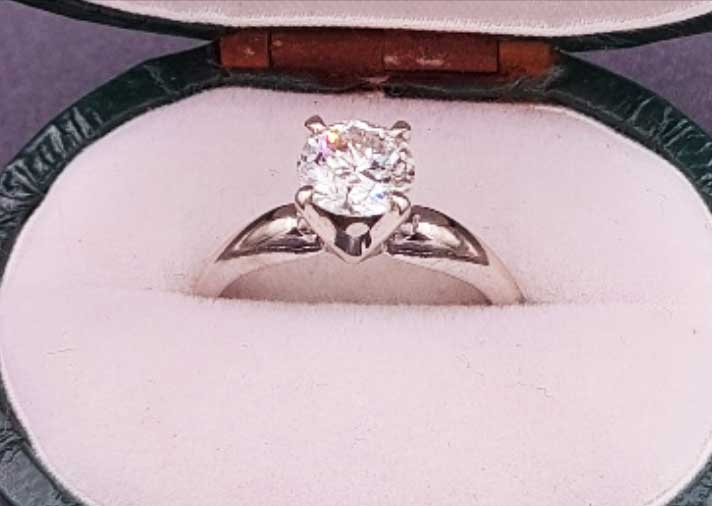
Diamonds were more than dazzling—they were declarations.
Meaning: Purity, strength, and everlasting devotion.
Use: Often featured in engagement rings, lockets, and star motifs to symbolize guidance and resilience.
Victorian jewellers favoured old mine-cut diamonds, whose soft sparkle felt intimate and romantic. In sentimental pieces, diamonds often spelled out secret messages in acrostic jewellery—like “DEAREST,” where D stood for diamond.
Pearl: Tears and Tenderness
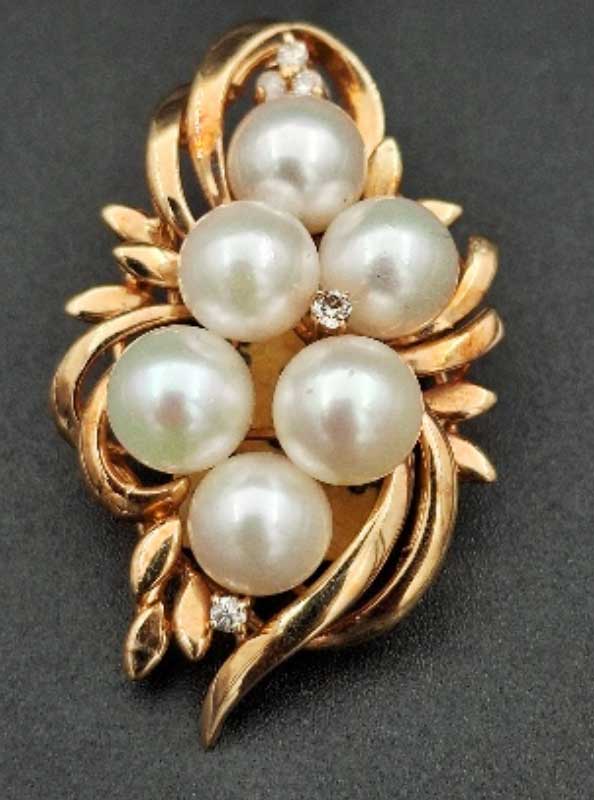
Pearls held a dual symbolism—both joyful and mournful.
- Meaning: Innocence, purity, and grief.
- Use: Worn by brides to symbolize virtue, and by mourners to represent tears.
Natural pearls were treasured for their organic beauty and emotional depth. In mourning jewellery, they offered a gentle way to express sorrow, often nestled in lockets or woven into hairwork pieces.
Garnet: Passion and Protection
Garnets were beloved in the Romantic Period (1837–1860), often set in gold and surrounded by intricate metalwork.
- Meaning: Love, vitality, and protection.
- Use: Frequently gifted between lovers, garnets were believed to guard against nightmares and promote fidelity.
Their rich red hue mirrored the intensity of Victorian courtship—fiery, formal, and full of feeling.
This month, we look at a fascinating subject: The meaning of gems.
Emerald: Hope and Rebirth
Queen Victoria’s engagement ring featured a serpent with emerald eyes—her birthstone and a symbol of eternal love.
- Emerald: Represented rebirth, wisdom, and hope.
- Symbolism: Often used in snake motifs, which themselves symbolized eternity and loyalty.
Emeralds added a touch of mysticism to jewellery, linking the wearer to nature and renewal.
Sapphire: Truth and Devotion
Sapphires were prized for their celestial blue and their moral associations.
- Meaning: Truth, sincerity, and spiritual insight.
- Use: Worn by those who wished to express loyalty and depth of feeling.
In an era of strict social codes, sapphires offered a quiet way to signal one’s inner convictions.
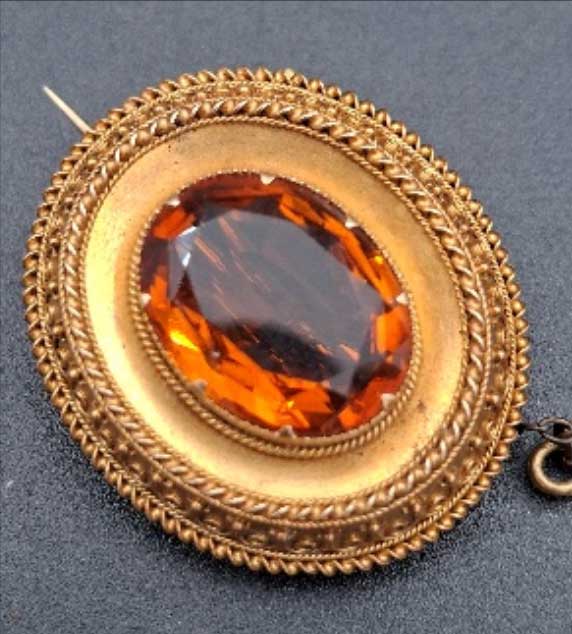
Topaz & Citrine: Warmth and Wealth
Golden stones like topaz and citrine brought warmth to Victorian palettes.
- Topaz: Symbolized strength and intelligence.
- Citrine: Associated with joy, abundance, and clarity.
These stones were often used in daywear, adding a cheerful glow to otherwise sombre attire.
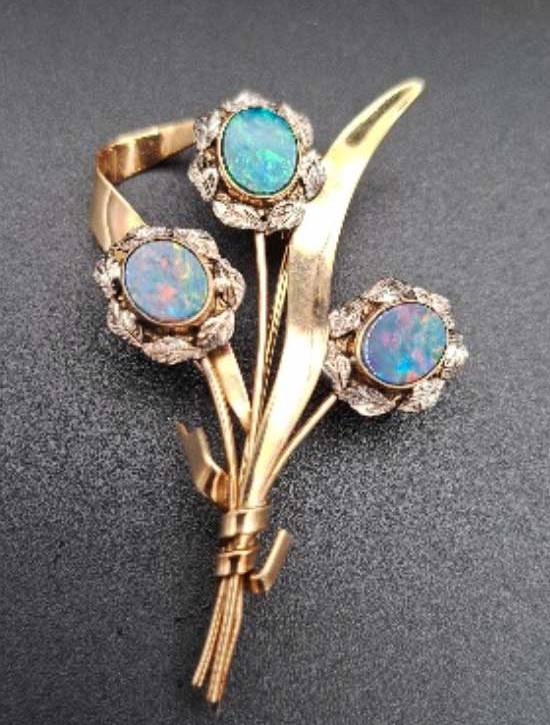
Opal: Mystery, Magic, and Misunderstanding
Few stones in Victorian jewellery carried as much mystique—or controversy—as the opal.
- Meaning: Hope, creativity, and emotional expression.
- Use: Worn by romantics and free spirits, opals were prized for their shifting colours and ethereal glow.
Despite their beauty, opals were tangled in superstition. A popular 19th-century novel by Sir Walter Scott cast them as unlucky, causing a dip in popularity. But Queen Victoria, ever the trendsetter, adored opals and gifted them freely to her daughters and friends, helping restore their reputation.
Victorian opals often featured in pendants and lockets, paired with seed pearls or diamonds to amplify their dreamlike quality. Their “play of colour”—a dance of fire and light—made them perfect for expressing the inexpressible: longing, imagination, and the mysteries of the heart.
Bonus: The Language of Flowers in Gem Form
Victorians adored floriography—the language of flowers—and often extended this symbolism to their jewellery.
- Amethyst: Serenity and spiritual love.
- Peridot: Compassion and renewal.
- Turquoise: Friendship and protection.
Combined with floral motifs like forget-me-nots and violets, these stones created layered messages of affection and remembrance.
Final Thoughts
Victorian jewellery was never just decorative—it was deeply personal. Each stone was chosen with care, each piece a reflection of the wearer’s heart, history, and hopes. At Chalice Antiques, we believe these meanings still matter. Whether you’re drawn to the quiet dignity of jet, the passionate glow of garnet, or the timeless grace of pearls and diamonds, you’re not just collecting—you’re connecting.
We would love you to explore our collection and use this article to understand the meanings behind each piece.”